

grey laminated glass
The Runout Reality: What Shops Are Really Buying (and Why It Matters) If you’ve ever chased a mysterious vibration or a whisper of noise in a gearbox, you’ve met the culprit: radial runout. The tool most machine shops are leaning on now is the runout tester . To be honest, it’s not glamorous—two centers, a base, a probe—but it’s the quiet difference between a smooth spindle and a warranty claim. Quick background and where it’s built The instrument I’m looking at today is a pendulum-style runout tester from STR Machinery (Origin: No.17, Building 11, Hardware Building Material City, Botou, Cangzhou City, Hebei Province, China). It locates the shaft between two thimbles (centers), rotates the part, and the probe reads total indicator runout (TIR) directly in the radial direction. Simple, repeatable, shop-floor friendly. Why the spike in demand? Two words: electrification and noise. EV suppliers, servo motor makers, and precision pump builders are tightening GD&T callouts. Many customers say they used to accept 15–20 μm TIR on small shafts; now it’s single digits. Surprisingly, the cost of missing those specs isn’t just scrap—it’s downstream balancing, bearing heat, and customer returns. Product snapshot and specs Parameter Spec (typ.) Notes Center distance ≈ 50–500 mm (custom up to 1,000 mm) Real-world use may vary by fixture Indicator/probe 0.5–1 μm resolution (dial/LVDT) Digital readout optional Base and centers Cast iron or granite; HRC 58–62 centers Carbide tips optional Repeatability ≤ 1 μm (on gauge masters) Uncertainty U ≈ 2 μm (k=2) Max part weight ≈ 20 kg (higher on request) Balanced rotation recommended Service life 8–10 years typical With annual calibration Where it’s used (and what people measure) Automotive: camshafts, input/output shafts, e-axle rotors Industrial motors: spindles, armatures, pump shafts Medical and tooling: surgical reamers, precision mandrels Typical standards referenced on drawings: ISO 1101 run-out, ASME Y14.5 circular runout and total runout. Some customers also tie results to balancing per ISO 21940 for rotors. Process flow (how shops actually run it) Materials: granite/cast-iron base, hardened steel or carbide centers, LVDT or dial indicator. Methods: verify probe zero on a ring or artifact, mount shaft between centers, rotate by hand (constant speed helps), record TIR at multiple stations (bearing journals, seal lands). Testing standards: ISO 1101/ASME Y14.5 callouts; calibration to ISO 9001 procedures; traceability via a gauge block or roundness master. I guess the unsung hero here is consistency—same pressure, same speed, same operator notes. Customization options STR offers longer beds, custom centers for tiny diameters, dual-probe heads for axial and radial checks, SPC data output (USB/RS-232), and protective enclosures for shop-floor grit. Many customers say the data logging alone paid for itself in PPAPs. Vendor comparison (field notes) Vendor Gauge resolution Customization Lead time Certs After-sales STR Machinery 0.5–1 μm High (beds, probes, data) 3–6 weeks ISO 9001, CE Remote + spares Global Brand X 0.2–0.5 μm Medium 8–12 weeks ISO 17025 support Global onsite DIY V-block + dial 1–10 μm Low Immediate None Self-maintained Real-world results Case 1 (Tier-1 EV supplier): switching to a runout tester with dual-probe data logging cut camshaft scrap from 3.1% to 0.6% in 90 days; worst-station TIR dropped from 11 μm to 6 μm after process tuning. Case 2 (EU bearing plant): introducing standardized runout tester routines reduced balancing weights on small rotors by ≈18%, correlating TIR stations with mass eccentricity per ISO 21940. Compliance and paperwork Typical package includes ISO 9001 calibration record, CE declaration, and probe certificate. Test method references: ISO 1101 run-out symbols and ASME Y14.5 definitions. In practice, I’d still validate uncertainty against your own masters. Final thought Measuring runout isn’t exciting, but the payback shows up in quieter machines and calmer QA reviews. Actually, that’s priceless. ISO 1101:2017 — Geometrical product specifications (GPS) — Geometrical tolerancing — Tolerances of form, orientation, location and run-out. https://www.iso.org/standard/69150.html ASME Y14.5-2018 — Dimensioning and Tolerancing. https://www.asme.org/codes-standards/find-codes-standards/y14-5-dimensioning-and-tolerancing ISO 21940 (series) — Mechanical vibration — Rotor balancing. https://www.iso.org/committee/54108.html
about
grey laminated glass
Sjekkventil for 5 tommer En essensiell komponent i væskesystemer Sjekkventiler er viktige sikkerhetskomponenter i mange væskesystemer. De brukes for å forhindre tilbakestrømning av væske, noe som kan forårsake betydelig skade på systemet og utstyret. I denne artikkelen vil vi fokusere på sjekkventiler med en diameter på 5 tommer, deres funksjoner, bruksområder og viktigheten av riktig vedlikehold. Sjekkventil for 5 tommer En essensiell komponent i væskesystemer Når vi snakker om en sjekkventil på 5 tommer, refererer vi til den indre diametral størrelsen, noe som gjør den egnet for bruk i større systemer som industrielt vannbehandling, kjemiske prosesser, og også i enkelte HVAC-applikasjoner. Valg av riktig størrelse på sjekkventilen er avgjørende for å sikre effektivitet og pålitelighet i systemet. check valve 5 inch Det finnes forskjellige typer sjekkventiler, inkludert fjærbelastede og tyngdekraftaktiverte. Den fjærbelastede sjekkventilen er ofte brukt når det er behov for rask respons og lavt trykkfall, mens tyngdekraftventiler kan være mer robuste og egnet for høyere trykk. Valg av type sjekkventil avhenger av spesifikke bruksområder og systemkrav. For eksempel, i tilfeller der strømning er uforutsigbart, kan en fjærbelastet sjekkventil være mer hensiktsmessig, mens tyngdekraftventiler kan være tilstrekkelige i mer stabiliserte systemer. Ved installasjon av en 5 tommers sjekkventil, er det lite rom for feil. Riktig plassering i systemet er avgjørende. Ventilen bør installeres i en vertikal eller horisontal posisjon, avhengig av produsentens spesifikasjoner, for å sørge for optimal funksjonalitet. I tillegg er det viktig å sørge for at ventilen ikke er plassert for nær andre komponenter som kan skape turbulens og påvirke ytelsen. Vedlikehold av sjekkventiler er også en kritisk faktor. Regelmessig inspeksjon for slitasje, sedimentoppbygging og korrosjon kan forhindre driftsstans og kostbare reparasjoner. Det er viktig å følge produsentens instruksjoner for vedlikehold, og om nødvendig, erstatte ventilen for å sikre systemets integritet. I konklusjon, sjekkventiler på 5 tommer spiller en viktig rolle i mange industrier ved å sikre sikker og effektiv væskeflyt. Riktig valg, installasjon og vedlikehold av disse ventilene kan bidra til å forhindre alvorlige problemer, beskytte mot forurensning, og forlenge levetiden på hele væskesystemet. Uansett bruksområde, er det viktig å anerkjenne betydningen av denne enkle, men kritiske komponenten i enhver væskehåndtering applikasjon.
-

High quality industrial productsagement

High quality industrial products
View Details -

Meet the diverse needs of customers

Meet the diverse needs of customers
View Details -

Strict quality control

Strict quality control
View Details -

Top raw materials

Top raw materials
View Details -

Trusted supplier

Trusted supplier
View Details
Our application


news and information
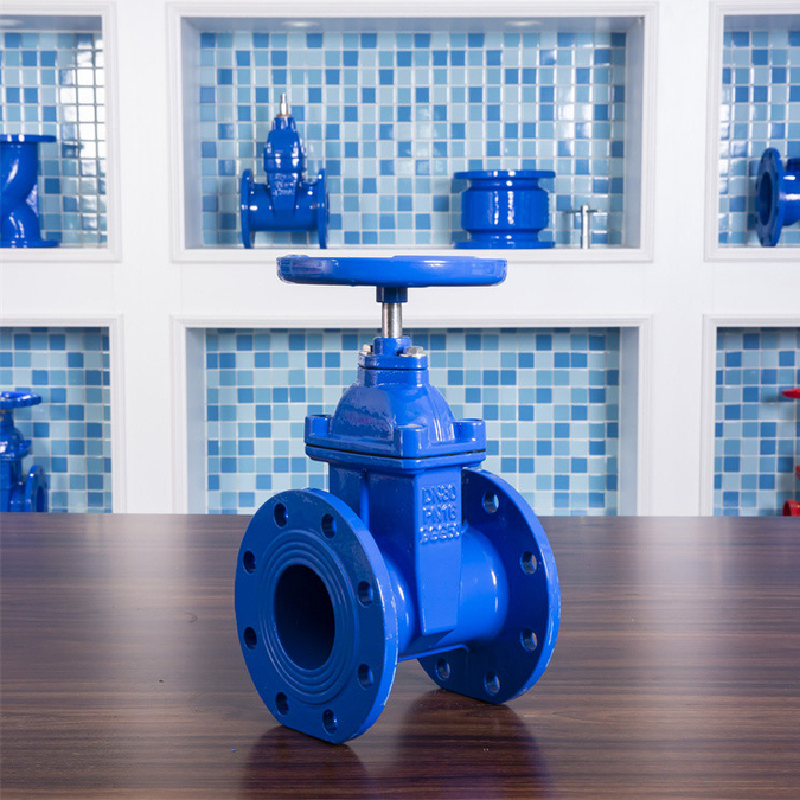
Water valve issues preventing proper shut off and causing leaks in the system
Troubleshooting a Water Valve That Won't Shut Off Dealing with plumbing issues can be a homeowner's
Vannventil for kontroll av vannstrøm og trykkregulering
Vannventilens Rolle i Vannfordeling Vann er en av de mest essensielle ressursene på jorden, og forva
Vannventil for kontroll av vannstrøm og trykkregulering
Vannventilens Rolle i Vannfordeling Vann er en av de mest essensielle ressursene på jorden, og forva
 English